Thank you for contacting us.
We will respond as soon as possible.

CERTIFICATIONS


ISOLTECO® 150
PRE-MIXED PLASTER, PROVIDING EXCELLENT THERMAL INSULATION. 150 kg/m3
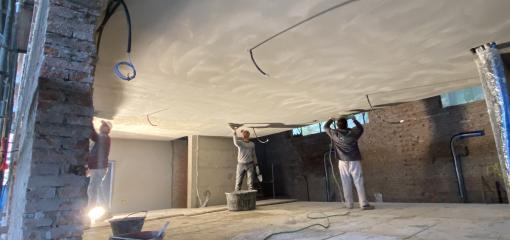
ISOLTECO® 150 is the thermally insulating plaster that combines good insulation (λD 0.058 W/mK) with greater strength (1.16 N/mm2): it insulates external walls, internal walls and ceilings and corrects thermal bridges, with no boards and no joints, adapting to any surface.
Made with selected hydraulic binders and EPS beads coated with E.I.A. additive, it only needs water and is applied from 2 to 20 cm, indoors and outdoors: once cured it is unaffected by rain, moisture and temperature changes (capillary absorption W1), stays breathable (μ 9) and is class A2-s1,d0 for reaction to fire.
It can be applied by machine or by hand: mixed in a cement mixer or horizontal mixer with about 6-7 L of water per bag. After at least 7 days it is skimmed with ECAP® ADP (4-5 mm) and finished with breathable silicate or silicone paints or coloured finishes from the ECAP® range, after ECAP® F primer.
NOTE
- Dry density 150 kg/m3; bulk density of the dry mortar about 165 kg/m3.
- Thermal conductivity λD 0.058 W/mK (UNI EN 12667).
- Compressive strength 1.16 N/mm2 (UNI 6132); flexural strength 0.42 N/mm2 (UNI 6133).
- μ 9 (UNI EN 1015-19).
- Adhesion 0.1 N/mm2 (UNI EN 1015-12); capillary absorption 0.1 kg/m²s0.5, W1 (UNI EN 1015-18).
- Reaction to fire A2-s1,d0 (EN 13501-1); specific heat 1.0 kJ/kgK; freeze/thaw durability assessed (UNI EN 998-1).
- Thickness 2-20 cm: first coat about 1 cm, then coats up to 2.5-3 cm after 4-24 h.
- Application +5 to +35 °C, RH 45-80%; not in rain or frost.
- Yield per bag: 3.00 m2 at 2 cm · 1.50 at 4 cm · 1.00 at 6 cm · 0.86 at 7 cm · 0.60 m2 at 10 cm.
- 60 L bag; pallet of 44 bags. Mixing water (by hand) about 6-7 L per bag.
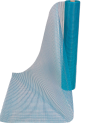
- Skim coat ECAP® ADP 4-5 mm; fibreglass mesh 160 g/m2 recommended.
PACKAGING
- External thermal insulation of walls.
- Thermal insulation of internal walls.
- Thermal insulation of ceilings.
- Correction of thermal bridges.
- Protection of façades from rain.
DOWNLOADS
SHARE